
What a Google Tag Manager Agency Really Does for Your Business
- Posted on November 20, 2025
Data has emerged as the foundation for all well-informed decisions in the rapidly evolving field of digital marketing. The purpose of a Google Tag Manager agency is to assist companies in effectively gathering, handling, and analysing this data. Even the most advanced marketing techniques may fail due to errors or lost chances if tags are not implemented correctly. Businesses may guarantee dependable tracking for their websites and digital platforms by collaborating with a Google Tag Manager agency, which offers a solid basis for efficient research and optimisation.
These days, digital tracking is more than merely inserting code fragments. By providing organised control over the tagging process, a Google Tag Manager agency guarantees that companies can change their analytics scripts, conversion tags, and marketing pixels without continuously depending on developers. Teams can work more quickly and modify their data frameworks as campaigns change thanks to this freedom. Beyond setup, the agency works as a strategic counsellor, making sure that each tag used has a purpose that is in line with quantifiable goals.
The guarantee of precise, consistent data is a major benefit of working with a Google Tag Manager agency. Misconfigured analytics tags can make metrics untrustworthy and result in poor decision-making. By examining current configurations, finding faulty tags, and making sure that every event or conversion is accurately logged, an agency may assist avoid such mistakes. By providing assurance in the data guiding marketing expenditures and plan modifications, this accuracy helps a company achieve its larger digital objectives.
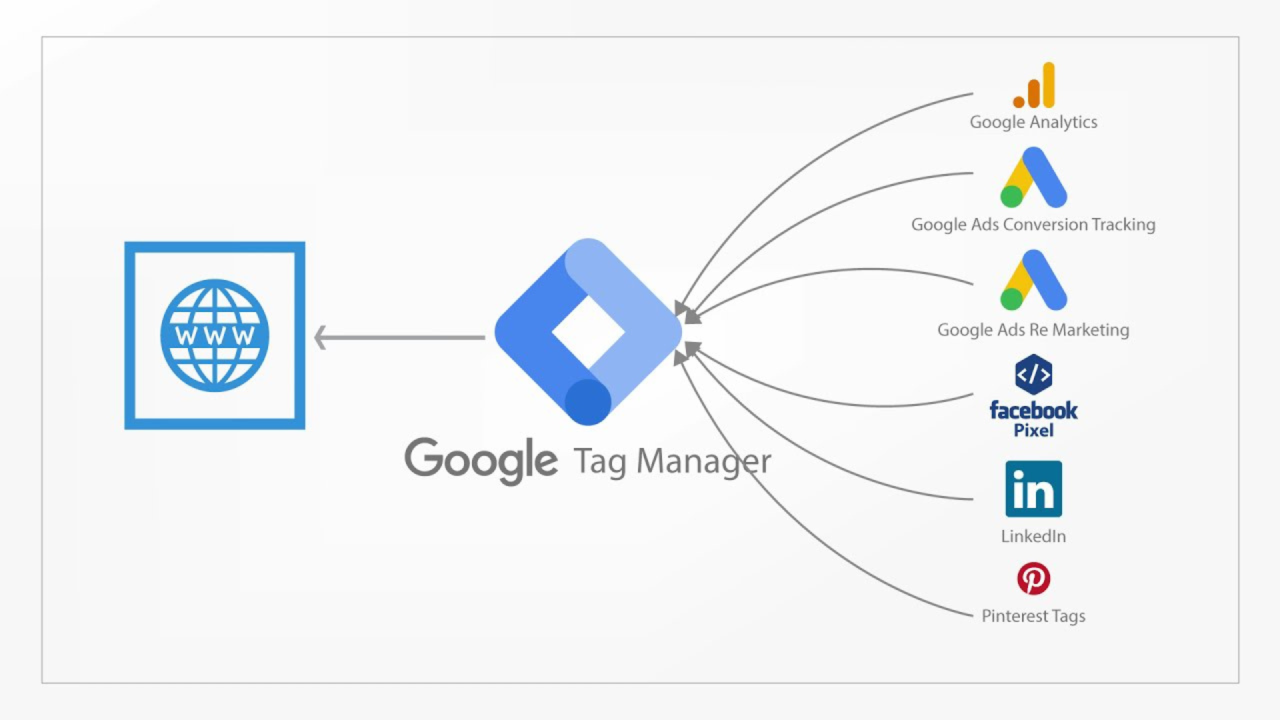
Tag management can quickly become challenging for any company that runs numerous ads on various platforms. This intricacy is made simpler by a Google Tag Manager agency using event monitoring, logical naming rules, and organised container hierarchies. From a single, centralised platform, organisations may manage all tags rather than dealing with disorganised code directly in the source files of a website. In order to avoid duplication or site performance issues, the agency makes sure that tags fire under the proper circumstances. This technical field protects a website’s dependability and performance, preserving a satisfying user experience.
The ability of a Google Tag Manager agency to integrate tracking across several tools is another crucial contribution. Companies frequently employ several platforms for customer relationship management, advertising, and analytics. With Google Tag Manager, an experienced firm can easily connect these products, enabling unified reporting and consistent tracking. In addition to lowering manual labour, this integration offers a comprehensive picture of user interactions across all media. When coordinating campaigns across social, search, and email marketing, the data consistency it offers is priceless.
For assistance with tracking conversions, businesses often go to a Google Tag Manager agency. Measuring the success of a campaign requires an understanding of how people progress from awareness to action. To record important interactions like form submissions, video plays, and product purchases, an agency sets up triggers, variables, and tags. Marketing teams may see which efforts are successful and which require improvement by keeping thorough records of these occurrences. This type of precise attribution guarantees that decisions are supported by strong evidence and that budgets are used effectively.
Technically speaking, using Google Tag Manager necessitates knowing not only where to put tags but also how to keep the site running smoothly and adhere to data privacy laws. By employing consent-based triggers and, when necessary, anonymised data gathering, a Google Tag Manager agency makes sure that all tracking conforms with data protection regulations like the GDPR. Through transparency and compliance, the agency’s experience assists clients in striking a reasonable balance between gathering valuable data and upholding user confidence.
By establishing sophisticated tracking frameworks that provide deeper insights, a seasoned Google Tag Manager agency goes above and beyond. For example, improved e-commerce tracking can display user behaviour at every point of the purchasing process, from product views to cart abandonments and actual transactions. Event-based analytics show how people interact with menu items, buttons, and sliders on a page. These findings are fed into cycles of ongoing testing and optimisation under the direction of the agency, resulting in consistent increases in user engagement and conversion rates.
Connecting data from many sources is a major difficulty for many marketing teams. To solve this, a Google Tag Manager agency maps uniform data layers across apps and websites. By serving as organised stores, these data layers guarantee that the identical bits of information are reliably recorded across platforms. Businesses may improve data quality and speed up analysis by avoiding the confusion of dispersed or mismatched measurements with a standardised structure. It is much simpler to scale campaigns or include new tracking requirements in the future with this methodical approach.
Additionally, a well-managed Google Tag Manager solution lessens reliance on developers. When waiting for technical deployment, marketing teams frequently experience delays. However, a Google Tag Manager agency eliminates this bottleneck by enabling them to independently deploy or modify tags using predefined frameworks. By managing permits and upholding a quality assurance workflow, the organisation guarantees the security of its procedures. Because of this, marketers can test and improve their efforts faster, keeping them relevant and moving forward in cutthroat markets.
The significance that a Google Tag Manager agency plays in troubleshooting and continuous maintenance is one of the most frequently disregarded advantages. Company websites change over time, adding new sections, redesigning layouts, and updating platforms. If not carefully monitored, any modification has the potential to disturb current tags. By carrying out routine audits, checking tag firing accuracy, and guaranteeing compatibility with new site features, the agency avoids problems. As a firm grows and changes, this proactive oversight ensures that reporting stays trustworthy and protects data integrity.
A Google Tag Manager agency remains at the forefront of innovation as the analytics market changes. An agency constantly improves its techniques, from incorporating new tracking systems to enabling server-side tagging implementations that improve site performance and strengthen privacy. Businesses are guaranteed to profit from the newest best practices and technical advancements thanks to this flexibility. Working with such an organisation gives you the assurance that their tracking system will always be up to date, effective, and consistent with evolving requirements.
A Google Tag Manager agency offers strategic insights derived from appropriate data governance that go beyond the technicalities. The agency enables organisations to properly measure advertising returns and find valuable consumer journeys by guaranteeing accurate tracking foundations. Additionally, it aids in the interpretation of patterns and trends, highlighting chances to modify design, messaging, or offer timing. A competent agency partnership differs from simple in-house setups due to its dependability, which turns conjecture into actionable analysis.
Another essential component of an agency’s job is communication. A Google Tag Manager agency works closely with all client stakeholders, including data analysts, engineers, and marketing managers. Misunderstandings are avoided and team uniformity is maintained through organised communication and clear documentation. The agency makes sure that every choice reflects both technical accuracy and marketing goals, whether it’s launching a new digital campaign or updating measuring techniques. In addition to fostering a shared commitment to precise assessment and long-term progress, this partnership model increases trust.
A Google Tag Manager agency’s benefits also include internal empowerment and training. Good agencies teach businesses how to evaluate data and use Tag Manager with confidence instead of withholding technical expertise. In order to enable clients to independently manage daily tracking tasks while depending on the agency for complex projects or audits, they may offer workshops or documentation on best practices. By reducing long-term dependency and fostering resilience, this knowledge-sharing strategy helps organisations become more analytically independent.
Scalability and standardisation are two advantages that a Google Tag Manager agency offers to businesses with numerous websites or global operations. Having different tags for multiple markets can easily lead to inconsistencies. By using a single governance model, the organisation makes sure that all containers adhere to the same set of guidelines. The government uses structured templates to retain control over language differences, subdomains, and regional compliance requirements. Businesses are able to maintain reliable analytics across all digital assets thanks to this worldwide oversight.
In summary, a Google Tag Manager agency’s responsibilities go well beyond simply setting up tags. It provides an advanced architecture that supports compliance, strategic insight, and data accuracy. Businesses may make confident, data-driven decisions with the help of a Google Tag Manager agency, which streamlines technical deployment and permits customisable campaign tracking. Better user comprehension and more successful marketing results are directly correlated with increases in accuracy, performance, and analytical clarity.
Hiring a Google Tag Manager agency is not a luxury for any company dedicated to long-term digital success; rather, it is a necessary first step in becoming an expert in the data-driven marketing of the future.
Data has emerged as the foundation for all well-informed decisions in the rapidly evolving field of digital marketing. The purpose of a Google Tag Manager agency is to assist companies in effectively gathering, handling, and analysing this data. Even the most advanced marketing techniques may fail due to errors or lost chances if tags are…